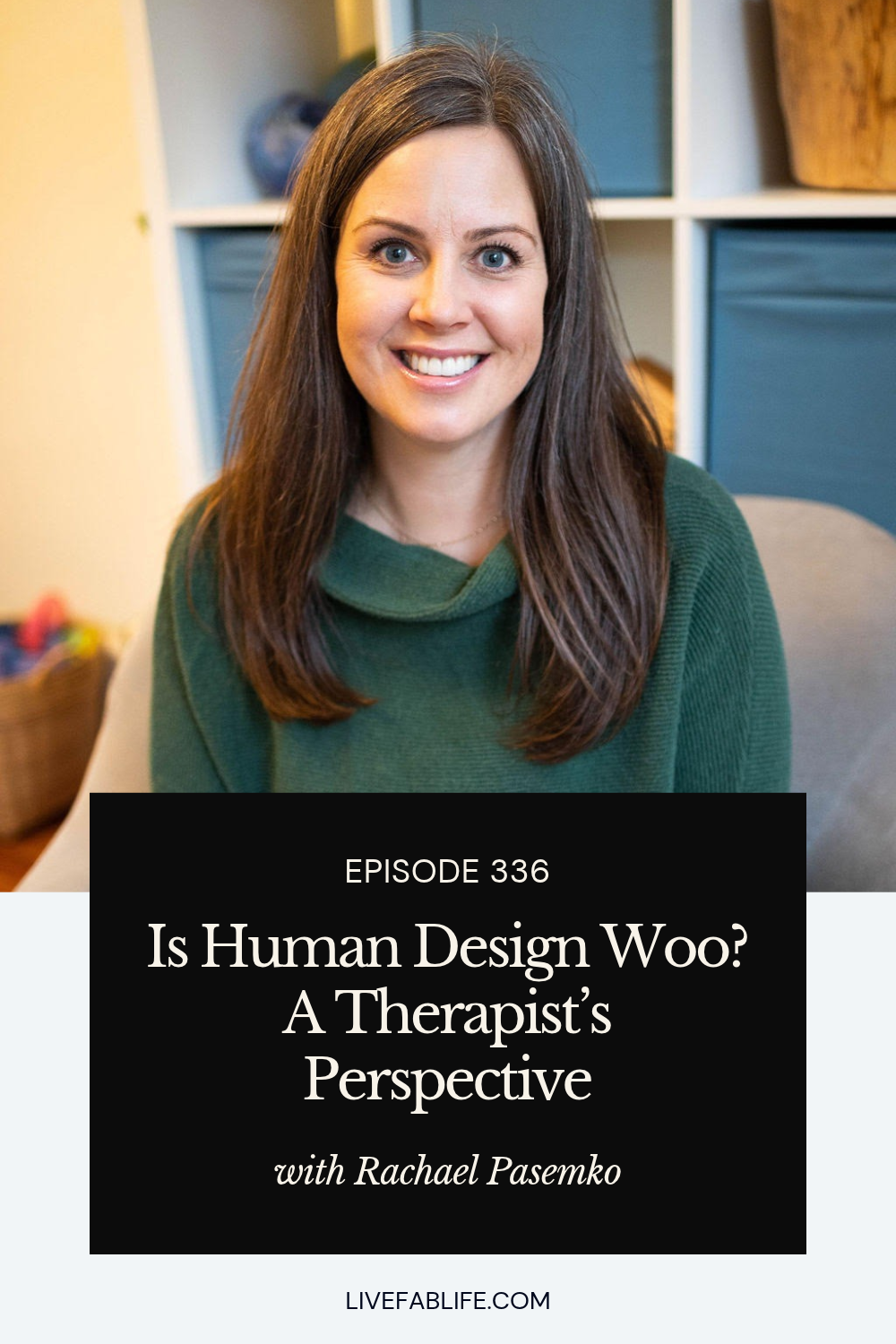
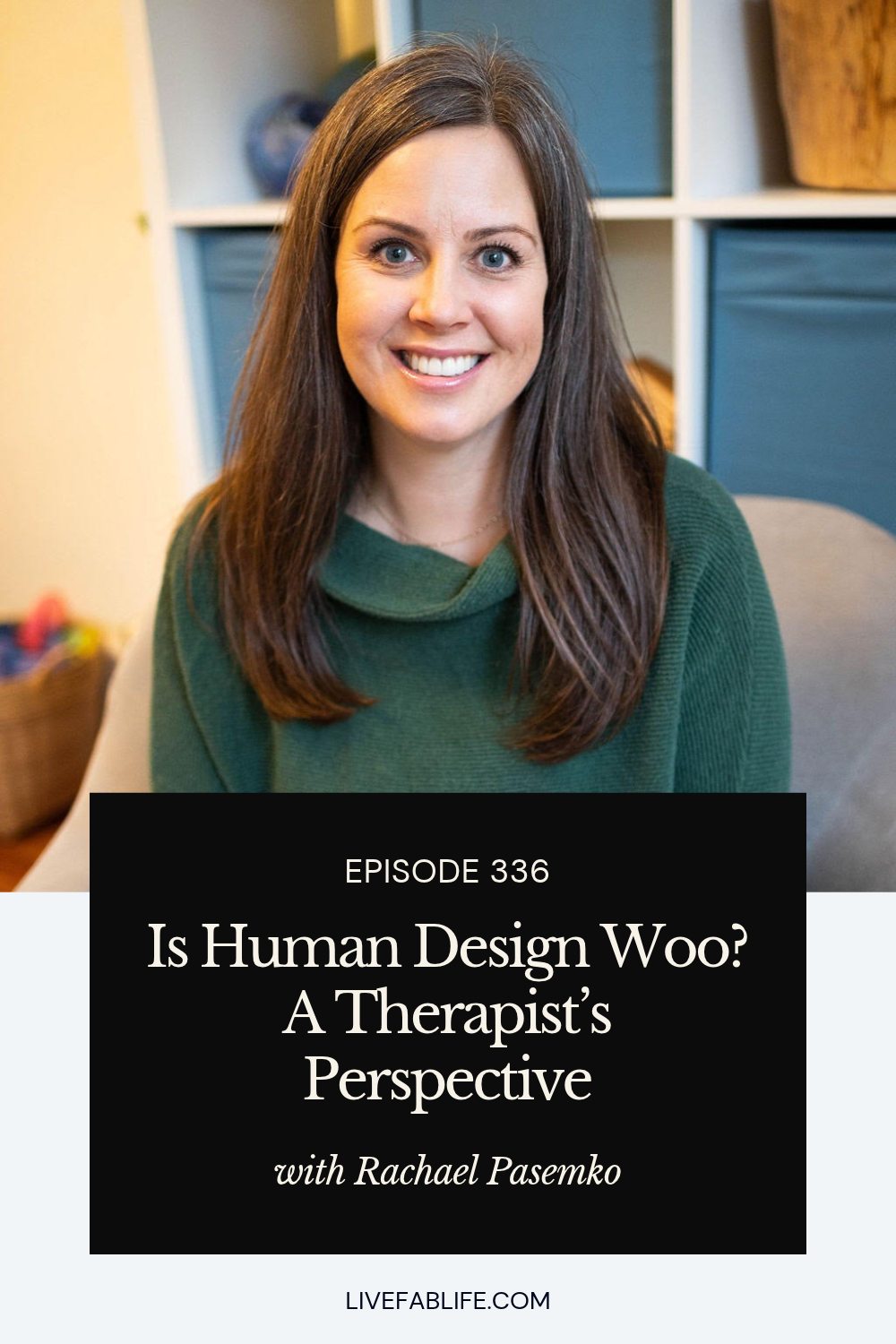
Human Design often gets filed under “woo.” Rachael Pasemko is a licensed therapist who uses it in her own life.
Rachael is a social worker and therapist based in BC, Canada. For over 20 years, she has worked with children, families, and adults looking for more ease in their lives. She also supports other therapists by teaching them her relational, embodied approach, and more recently she’s been curating restorative art workshops and spaces for women to connect more deeply with themselves and each other.
Rachael is a 5/1 Splenic Projector who loves working with Human Design.
In this episode, Rachael and I talk about:
How she became a therapist, how she found Human Design, and what she was doing when she did
Whether Human Design is “woo,” and what “woo” even means
What women in midlife get told about themselves that isn’t true
What she changed in her work after learning she’s a Projector
Her answer to the question that runs through this series: “What did you do for years just because it’s how you were taught?”
Listen to the Episode:
“There’s a lot of forgiveness that comes in through Human Design in letting people be themselves and be designed how they are.”
Read the Transcript:
Naomi Nakamura: Hello, Rachel, welcome to the show.
Rachael Pasemko: Hi, Naomi, thanks so much for having me.
Naomi Nakamura: I am so looking forward to our conversation. We connected through Lisa Haukom’s photo club. Lisa was on the show, I think last year and I have met so many wonderful people through the club and you are among them and I'm so excited to have you join me and the conversation we're about to have.
Rachael Pasemko: Yes. I'm so happy you invited me and I look forward to seeing what we co-create here.
Naomi Nakamura: Now, for those who don't know you, introduce yourself and tell us what it is that you do.
Rachael Pasemko: I am Rachel Pasemko. I live in BC in Canada and I have a hard time being succinct about what I do, but I will say that for most of my career, I've been a therapist, like a mental health clinician that provides therapy. And my specialty was in working with children. And so I still do some supervision and teaching and mentoring in the mental health field.
Naomi Nakamura: Awesome. And that's actually what I wanted to talk to you about today, because you are also very into Human Design as I am. And I wanted to have that conversation about as a therapist, a licensed medically licensed mental health professional, like where does human design fall in for you. So before we get into that, tell us what is your human design?
Rachael Pasemko: I am a 5/1 Splenic Projector.
Naomi Nakamura: 5/1?
Rachael Pasemko: Yes.
Naomi Nakamura: That is very interesting. I have, you know, I know that the 5/1 is not a very common combination, but I feel like I have done so many readings for 5/1’s and I know a lot of 5-1’s, but I also know it's not, it's not as common as like, I'm a 1/3, you know?
Rachael Pasemko: I was just gonna say, I feel like there's so many 1/3’s in my life, I feel like everyone I meet is a 1/3, and here we are together, and you're a 1/3.
Naomi Nakamura: Yes, yes. So let's back things up a little bit, and how did you come to work as a therapist? What drove you to do this kind of work?
Rachael Pasemko: I think that essentially is linked to my Human Design. I'm a very curious person. And the thing that I'm most curious about is how humans work and how we become who we are and how we cope and how our past effects are present. And that's always been very fascinating to me.
And so I went into the field of social work and that led me into doing deeper education around therapy. And I love working with symbols and metaphors and the body and the imagination. Almost more than spoken word and so that led me into working with children so we could deal with their challenges through play and the right hemisphere.
Naomi Nakamura: Very interesting. Now, how did you come to Human Design?
Rachael Pasemko: So it was about two years ago. I was in Sayulita, Mexico, where I spend a couple of months a year. And I had just heard the word a couple of times. And so my curiosity was piqued. I'm like, I don't even know what that is. I need to know more about it. And so I found a Human Design reader that lives in Sayulita and I invited her over and I had my first reading.
And from there, I went into podcasts, one of them which was yours and I would go for walks in my neighborhood and I would just listen to every podcast episode I could find, especially about my Type, but about all the Types And it's really changed my life. From there, I went into a Human Design coaching program, and yeah, I'm still learning.
Naomi Nakamura: There's a lot to learn about Human Design.
Rachael Pasemko: There's so much to learn, and it's just so fascinating, but also extremely validating.
Naomi Nakamura: Yes.
Rachael Pasemko: And freeing.
Naomi Nakamura: Yes, very freeing. So I'm gonna ask you the question, that's the through line for all of the episodes that I am doing in this interview series. Reflecting on your professional work and your Human Design, what is something or what are things that you did for years, just because you were taught that?
Rachael Pasemko: There's probably a long list. So first I would say I worked way too hard and I expected myself to be very productive and put in eight hours five days a week and work that hard.
And when I first learned I was a Projector, I was like, what? You mean I'm designed to only work three or four hours a day? That's something I always knew, but I didn't have the words or the validation for it. And so I overrode that and I was burnt out, I think, for most of my life before I learned about my Human Design. I overrode my inner knowing about what I needed because I had never met a person that works three hours a day like it was unheard of. And so I wasn't able to do that.
And I would say another thing that comes to mind is meeting other people's expectations of who I am meeting other people's expectations of who I am and what I should do and how I can help them. I think that's being big in my life and so I have a pattern of doing what other people expect me to and really meeting other people's needs and I'm so good at it. And I think it makes me a great therapist. But at the same time, I would override my own needs, because there's a dynamic there around me fulfilling what other people expect of me. So that's a couple of things I think of.
Naomi Nakamura: Oh, I can relate to both of those so hard.
Rachael Pasemko: Going back to the Projector energy, it's like, because the world is not situated that way. There's like, to come to the masses, I guess, society, and say, I'm a Projector, this is how my energy works. I am not meant to work eight to five, 40 hours a week, 60, 80 hours a week.
Naomi Nakamura: You're just labeled lazy. Or unmotivated or you're just not, you're not cut out for this.
Rachael Pasemko: Yes, and I had so much self blame around it. So many therapists see five, seven, nine clients a day. And so that's what I was trying to do in the beginning is see five clients a day, five days a week. And then I was like just flattened. And so I didn't know I was a Projector at the time but I started scaling back and I'm like, I'll work four days a week. I'll see three people a day, trying to find a balance where I could be present and be alive in my sessions and also hold on to who I am. So that was a big learning curve that I felt shame about it. I felt shame that I couldn't work as hard as other people.
Naomi Nakamura: Well, and also I'm presuming, so correct me if I'm wrong, the traditional business model is a billable hour type of thing too.
Rachael Pasemko: Yeah. I get paid per session. So it's like, it was, yeah, that's a model that is not built around how I function in the world. Well, a lot of people function in the world.
Naomi Nakamura: True. True. And then going back to your other thing about meeting people's needs, I can relate to that. I understand, and I would imagine that as you're trying to advocate for yourself, there's also that struggle of guilt that you're having to put up with. I can't do this for you, at least not right now.
Rachael Pasemko: Yes, as a therapist, I have done years and years of my own therapy. So I know both chairs very well. And boundaries have been a really hard piece of work for me because it was like I had this inner impulse that if someone needed something and I could do it, like I had to do it. There just was no in between, like I had to do it. So it's been a big learning for me to take rest when I need rest and to hold that for myself.
Naomi Nakamura: I think your 5th line probably factors into that a lot too, huh?
Rachael Pasemko: Yeah, I think so.
Naomi Nakamura: Of being the leader that people see that you can guide them through something, but then also for you to know when you've taken them as far as you can take them.
Rachael Pasemko: Yes, and that's so very nuanced, right? It's an interesting conversation.
Naomi Nakamura: So your clinical training and your Human Design explain people in similar, but also very different ways. Where do you see them being in agreement and also how it differs?
Rachael Pasemko: That's a huge question. (laughing)
Naomi Nakamura: That could be like an entire series of whole lines.
Rachael Pasemko: Totally. We could go down that, we could get our 1 Lines and go down that rabbit hole and like have enough episodes for a year maybe. But I can kind of speak to it personally in a sense, having done a lot of therapy and then also like working on my deconditioning and my Human Design.
So I'm a very relational, very embodied therapist. And so when I'm sitting with someone, what I'm focusing on is often their early relational experiences. How did their caregivers show up for them and what was their early attachment environment like and then helping them work on that through our therapeutic relationship and their own work and kind of heal those places that they were missed. And so I guess I think Human Design and therapy actually marry together really well as opposed to contrasting or contradicting each other. Because when I learned my Human Design, the way that I feel most seen is when I'm invited and when I'm recognized. And so as a child, I grew up in a family of Generators who are just built differently than I am. And so, yeah, you can relate to that.
Naomi Nakamura: I'm raising my hand. And I know the listener can't see me, but I'm raising my hand.
Rachael Pasemko: Well, which felt so good for me. I just felt recognized at that moment. But there's me, this little sensitive Projector that sees things so differently. And to be a well-happy human, I need my life structured in a different way. And I didn't ever get that. And so I think I ended up with some maybe wounds or emotional experiences that looking from a therapy lens, I would maybe look at my parents and be like, oh, this is how they couldn't show up for me, and this is what happened."
But when I look at it through Human Design, I'm like, "Oh, but it's just because we're built different." And of course they didn't know exactly what I needed because they're Generators and I'm a Projector. And so there's a lot of forgiveness that comes in through human design of letting people be themselves and be designed how they are.
And also, like it wasn't personal that maybe they I didn't get as much rest as I needed and they were go, go, go. And I learned how to override my needs when I was young, because I had to meet everyone else's needs and keep moving.
And I feel like even in the therapy world, you can look at things from so many lenses. So I'm very somatic and relational. And so I look at body sensations and early life relationships and how they're coming together to help us understand what the challenges are. But if I was a cognitive behavioral therapist, I would be looking at what someone thinks and how what they think affects how they feel and behave. Or so there's so many different lenses in the therapy world. And I feel like if you span out just a little bit further, it brings in spirituality and human design and religion. And there are all lenses that look at the same thing in a bit of a different way.
Naomi Nakamura: I feel like I could have taken a whole lot of notes on what you just said. But there are two things that came to mind.
One, and you said this so perfectly that I just realized like this is actually what I've been thinking, but you verbalized it is that Human Design brings a level of kindness that might have been missing. And I actually had this conversation with a friend yesterday where we were talking about how we've changed and evolved and I said, “In my younger years, I feel like I was a really, really, really judgmental person. And I don't feel like I'm that way now.”
And based upon what you just said, I can see how learning my Human Design, like what, seven, eight years ago, maybe, I think, I'm losing track of years here, but I think that has been a significant factor in me becoming less judgmental because like you just said. And realizing that you are designed differently from your parents like that brought more kindness into how you reflected upon your past experiences.
Rachael Pasemko: Yeah, it invites forgiveness in a way.
I can just be in a relationship with someone and let them be themselves because that's how they're designed. And I happen to be designed differently and that's okay. We can all coexist and be different. There's no one right way.
Naomi Nakamura: Yeah. The other thing you said is, and maybe this is just me not knowing, but I just didn't even realize that there are different kinds of therapists too.
When you're talking about your being a somatic relational versus a cognitive, I'm just like, oh, it never even dawned on me that there's all these other different kinds of therapy practitioners too.
Rachael Pasemko: Yeah, there's a lot of different styles and some of them even contradict each other a bit, right? And therapists get a bit stuck in their camp and they're like, I practice this way, this is the right way. And I might be stuck in that camp a little bit around somatic relational practice. But yeah, it's a broad field.
Naomi Nakamura: So Human Design can sometimes be perceived as something that is “woo”, which, I'm like, I don't even know what “woo” is, define what is “woo.”
There's part of me that also thinks that that word has a lot of conditioning behind it too. But in terms of you being a clinician, a therapist, how do you approach that? And does it cost you anything professionally to, to talk about human design and to practice it and to be open to it.
Rachael Pasemko: That's also a big question.
Naomi Nakamura: It is one that I honestly have struggled with because I think it's held me back from doing a lot of things that I want to do and saying a lot of things because I work in tech and I have a lot of people who have opinions about things that I think personally, it's like held me back from things. And so I'm completely curious as to how someone, a licensed medical professional who so embraces Human Design, what are your thoughts on that and how do you approach that?
Rachael Pasemko: Well, it's held me back too because there's a bit of a rub. And as you were talking about the word "woo," I feel like it's very judgmental. It's very kind of degrading. It made me think about like the witches that were burned at the stake, you know, like, where did the word “woo” come from? Is it like patriarchal capitalism, let's squash this spiritual stuff before the people get empowered? I don't know. But it definitely has that rep reputation.
And there's so much I love about Human Design. It makes sense, and it's validating. And there's no way that I could ever be convinced that it's not legitimate, because everything that I've worked on in therapy, I can find in my Human Design. It's fascinating to me to put those two things side by side, but I haven't been as open on my social media because I'm like, "Well, other therapists are going to judge me." They're like, "That's not evidence-based practice." And then maybe I would lose credibility.
Naomi Nakamura: And my question is, and this is just me going down like a rabbit hole, but like how much of evidence-based practice has conditioning in it?
Rachael Pasemko: It is. That's exactly what it is. It's based on science. I would say my therapy practice is very deconditioned. I work towards being decolonized in my practice. You can't tell me that there isn't magic in a tree or the breeze or the ocean. There is so much more to our world and our existence than what, you know, some upper class white men put together in science books a hundred years ago, and people continue to research it and it's becoming more diverse, I know, which is great. framework still exists. And so I haven't brought Human Design into my practice as of yet. I'm just starting to do both practices simultaneously. So just kind of coming out more as a spiritual Human Design enthusiast as opposed to being just in the mental health field.
Naomi Nakamura: And just to clarify, I'm like not being anti-science. Like I'm the least anti-science person ever. But what I'm saying is that there is room for both. It is a “yes and” because it's like, what do we not know? And what are we dismissing because we don't know?
Rachael Pasemko: Yeah, I think there's so much more to humans we dismiss because we don't know. And I take what resonates with me, what holds my curiosity, which makes me, what makes me feel like a happier, more whole human and lights me up. I'm going to just keep following that. And if someone else doesn't understand it and calls it “woo”, that's okay. Maybe that's part of their design. But my design is, I've always consulted tarot decks and sort of been into more alternative spiritual practices all my life. And so this fits in that aspect of who I am, I think.
Naomi Nakamura: That's so curious that you've always had that in your life and then you also went down this professional path.
Rachael Pasemko: Yeah, yeah. I remember doing Ouija boards when I was like 15 and 16 and being so enthused with the spirits that are around us. You know, it's, um, I'm very open to everything life has to offer.
Naomi Nakamura: So in your clinical training, what does it teach you to see in people and what do you think it overlooks?
Rachael Pasemko: Oh, geez. Um, one, I don't think this is answering your question, but it came to mind. So one thing is, I get so curious about people's Human Design when I'm talking to them. Like they'll tell me about their life and their habits and this and that. And I'm like, oh, I bet you're a Manifesting Generator with a 6/2 profile. And sometimes I get to ask them and be like, oh, yeah, that's exact, or I bet you have this environment, right? So your question was about what human design sees in people that therapy might overlook.
Naomi Nakamura: Essentially, yes. What human design sees in people that therapy might overlook.
Rachael Pasemko: I guess the diversity of the way that people are designed. So I might learn the value of mindfulness or the value of journaling. And then as a therapist, when someone presents their challenge to me, I'm like, well, you need to start journaling every day. And that would be really helpful for you. But if I look at their Human Design, I think, Is it Gate 5? Anyways, there's a gate that, you know, if you have that gate, having a regular daily practice or daily ritual is something that's so helpful for you.
Naomi Nakamura: It is Gate 5.
Rachael Pasemko: And is it, oh, I was even right about that.
Naomi Nakamura: Yeah, I'm pretty sure it's Gate 5. Having a consistent ritual.
Rachael Pasemko: Where if someone doesn't have that, asking them to put a consistent ritual into their life, probably isn't helpful. So it's like, Human Design can help us specify so many aspects of our life where I think therapy is different person-to-person for sure. I follow the lead of the client and we have a co-created experience that meets their needs.
But what I'm able to offer them is probably less specific than what I might be able to suggest for them if I knew what their Human Design was.
Naomi Nakamura: Yeah, because you have to factor in their lived experiences too, right?
Rachael Pasemko: Yes. Yeah. And then if someone is very conditioned and they're not living their Human Design, that brings like a whole another layer.
Naomi Nakamura: So I, a lot of my listeners and people that I've worked with have spent years in corporate jobs as have I. And you know, with that mentality, it's, it's like how you say you keep pushing through and you grind and you just keep going, going, going, going. What have you seen in your work of what people have or how people have overridden themselves for a really long time?
Rachael Pasemko: Yeah, and I just want to reflect how common that is.
Naomi Nakamura: Common is not normal, but is very common.
Rachael Pasemko: Common is not normal, but there's something in our society that facilitates us overriding our own inner knowing.
And I guess it's like a disconnection from your true self. So if my true self is, “Oh, that's enough, I need to rest now”, but I never listen to it. And I'm just like, I must keep going, have to keep up with my Disneyland style life that just keeps moving, thinking of my childhood being at Disneyland.
But yeah, so we just get disconnected from our true self. And so then it's really hard to make decisions. It's really hard to know what's right for you, what's a yes and what's a no.
And so then we tend to outsource our power and we'll depend on people and things outside of us to tell us what's right and what's wrong, because we don't have connection to our own body sensations and our own like intuition and inner knowing, because we haven't listened to it for so long. Of course, there's also health ramifications for sure.
Naomi Nakamura: But it really comes down to being that disconnected and having a lack of self-trust and frankly a lack of self-confidence.
Rachael Pasemko: Yes, definitely. That's a very succinct way to say it. But then our body's going to slow us down, right? If we're living a life that's not true to ourselves, it's your body's going to show you eventually through, you know, some kind of accident that puts you in bed or a health challenge or something like burnout because you're working against your energy and you're spending all this extra, unnecessarily spending this extra energy working against yourself.
Naomi Nakamura: And you get to see all of this like with children.
Rachael Pasemko: Yes, I do. I've worked with adults also. So specialized with children and have done a lot of therapy with adults also. And I was thinking about mental health too, but I think the overriding is going to end up in a mental health diagnosis, like ongoing anxiety, ongoing depression, you know, just not feeling well and whole is going to impact our mental health, which affects your quality of life.
Naomi Nakamura: So you said you've worked with adults too. So I'm curious if you have any experience with or have observed women in midlife and what are they often told about themselves that are not true or have come to form beliefs about themselves that are not true?
Rachael Pasemko: I am in midlife.
Naomi Nakamura: So am I.
Rachael Pasemko: I love women. I love women in midlife.
What I see and what I've come to know is that there is a big transition, but I don't know how much of it has to do with hormones, but I see a lot of it has to do with power and taking our power back and becoming embodied and becoming clear and setting boundaries and kind of rising up.
So this is an energy that I'm connected to and I see in other women and I think there's stories in our society about women's worth decreasing as we age and women's worth being connected to our physicality and women's worth being connected to our physicality. And I don't believe any of that's true. And I feel like there's like a wave of, I don't know, midlife feminism uprising or something because there's this reclamation of power that's happening for us women in the middle.
Naomi Nakamura: It's Gen X reaching midlife.
Rachael Pasemko: And there's a wisdom reaching midlife. There's a wisdom that's coming through that's necessary and powerful.
Naomi Nakamura: Yes, we've lived through a lot of things, but also we are the generation that had to learn to take care of ourselves. And now we're reaching midlife. We were the latchkey life.
Rachael Pasemko: I was thinking – I grew up downtown Vancouver and I would go out for a day.
Naomi Nakamura: Oh, I ran the Vancouver Marathon. I love Vancouver.
Rachael Pasemko: Yeah, it's so beautiful. And I think about the culture now with kids and cell phones. When I was young, there was a pay phone. And if I happened to have a quarter, I could call my mom and check in. But if not, there I was, taking the Sky train here or getting up to this. And there was freedom. And we really had to learn how to depend on ourselves and our own instincts to get through our lives in a different way now that we're very closely connected to each other.
Naomi Nakamura: So I was talking to my college friends and I'm like, we didn't even have email back then. Email existed, but you had to go into a lab to use it and I never bothered to do that. I got my first email address in 1998. How did we have social lives? How did we know when to meet up and we actually took messages for each other and like passed messages on?
Rachael Pasemko: Yes. Because we didn't even have text message or paging. I still have a box of notes from high school. My friends and I would write each other notes and then we fold them all fancy and draw little pictures on them and it would just be like a long page that I wrote the night before. Anyways, early life text messages came on paper.
Naomi Nakamura: So what is the one thing that you have stopped doing in your therapy work after learning about your Human Design?
Rachael Pasemko: Well, my life is completely different. There's before Human Design and after Human Design. When I learned my Human Design, I owned a therapy group practice and I had seven or eight therapists that contracted with me and I ran my own one-to-one practice and I also ran the business.
Naomi Nakamura: You were like Harrison Ford in Shrinking.
Rachael Pasemko: Oh, well, not quite. I love that show, but I was way nicer.
Naomi Nakamura: I mean, you were the boss of the practice.
Rachael Pasemko: Yes, I owned a building and I created a practice and I was much warmer than Harrison Ford, even though I love him.
And so I learned my Human Design and I learned about bitterness. And I was like, “Oh my gosh, that's me.” I just feel so resentful around my running of the business part of my work. Not the therapy work, as much, but remembering to pay the tax bill and having to fix the toilet. And there was just so much and I was working too hard and I was carrying too much. So I sold my practice.
Naomi Nakamura: Oh wow.
Rachael Pasemko: And I closed my one-to-one therapy practice.
Naomi Nakamura: So for folks who don't know, the Not-Self for Projectors is bitterness. And that is the emotion, what you feel when you know that you are not in alignment with your Human Design for Projectors.
Rachael Pasemko: Yes. So that was a big wake-up call and I, yeah. So I sold my business.
Naomi Nakamura: That's a huge, huge life change.
Rachael Pasemko: Like huge, like life change, financial change, like everything change. Yep.
I just, well, and thank goodness for very supportive partners because I have some freedom to do those kind of big changes. And since then I've been working online and I've been cultivating a very relaxed, spacious schedule that allows for rest and play, but also being fulfilled by meeting with other fabulous therapists and supporting them. And so I changed my whole practice and my whole life after I learned my Human Design. And many other things too, but I think that's the one big, big switch.
Naomi Nakamura: It's a huge one and very admirable, very inspirational. That is a major life impact that you're like putting your Human Design into practice in your life.
Rachael Pasemko: Yes. Yes. And I think about having my Spleen as my, I can't think of the word right now. My Spleen is my
Naomi Nakamura: Your Authority?
Rachael Pasemko: My Authority. Having Splenic authority, I feel like my Spleen actually works the other way too. That when something's a yes, it's a yes. And I'm like, I can't explain this, but I just felt like a whole body yes. So I know this is for me. And so then I'll follow that and do it. But when something turns into a no, I can't turn that off either. And I'm like, I just got clear that this isn't a fit for me anymore. So it needs to stop as soon as possible. And this needs to be changed. So, um, yeah, I went and created work for myself that's flexible. I can work two or three or one hour a day. And it feels like a yes.
Naomi Nakamura: I needed to hear that cause I'm at this place right now where I have to decide what I'm, I got laid off six months ago and deciding what's next. And I had an opportunity come to me with the company that laid me off, to interview with them again.
And, you know, I was saying, "This is probably not a good thing." But then there's the other part that's like, "Well, in the United States, our healthcare is tied to our employment, right? So we have to make these decisions." And I was like, "Well, I need to be practical about this. And so I actually have not shared this story anywhere. So if you're listening, this is actually what happened. I've never shared this anywhere. So I actually interviewed with them again. And it literally was the job that I did for 18 years just with a different title. They rejected me.
Rachael Pasemko: What?
Naomi Nakamura: And I mean, it was not about me. It is about like I called a friend of mine who's still there. And I'm like, this is what happened. And she's like, Oh, let me tell you why. There's all this other stuff going on internally. She's like, why would you entertain coming back? I'm like, stop. You know why?
But back to your point, it's that pool where, as soon as I got the invitation to explore rejoining, like, it was an immediate like, oh, crap, which was my Splenic Authority telling me. But then it was so conditioned and the circumstances that were in and the way things are set up and you know, it's that pull. And so I don't feel bad about it. I'm a 1/3, I got to experiment and experience and that is how I learned. So I learned. and experienced and that is how I learned. So I learned.
Rachael Pasemko: Yeah, you gotta throw the spaghetti at the wall, and see if it sticks or not. And so sometimes that's just like, I'm gonna do this and you see what happens.
Naomi Nakamura: And it reiterated a lot of lessons for me.
Rachael Pasemko: Right. Maybe you just needed a little more confirmation.
Naomi Nakamura: Yes.
Rachael Pasemko: And also that really was your Authority speaking and you didn't listen to it.
Naomi Nakamura: Exactly.
Rachael Pasemko: Yeah.
Naomi Nakamura: Well, I have loved chatting with you. Thank you so much for joining. I kinda like wish you would have a podcast or something to talk more about all the things we do in selfishly. But in the meantime, where can people find you and connect with you?
Rachael Pasemko: Well, on Instagram, I am at @Rachael.Pasemko. Pretty easy to find. And my website is https://www.relationalembodied.com and it's quite play therapy focused at this time. But as I said when we opened I'm just starting to cultivate more creative arts experiences and embodiment experiences for women, retreats and doing some more work that is not therapy, but it's therapeutic and integrating human design into all of that.
Naomi Nakamura: So I also might be looking for a therapist who does embrace Human Design too.
Rachael Pasemko: Yeah, exactly. I think there's definitely going to be that as a method of doing our own work, is like if we can put the two worlds together, they're both stronger.
Naomi Nakamura: So I will include links to all of those things in the show notes for this episode. But once again, thank you so much for joining me. I've so love talking to you and I personally have enjoyed our conversation and I hope those listening will do too.
Rachael Pasemko: Yeah, thanks so much Naomi. It's been a pleasure being here.
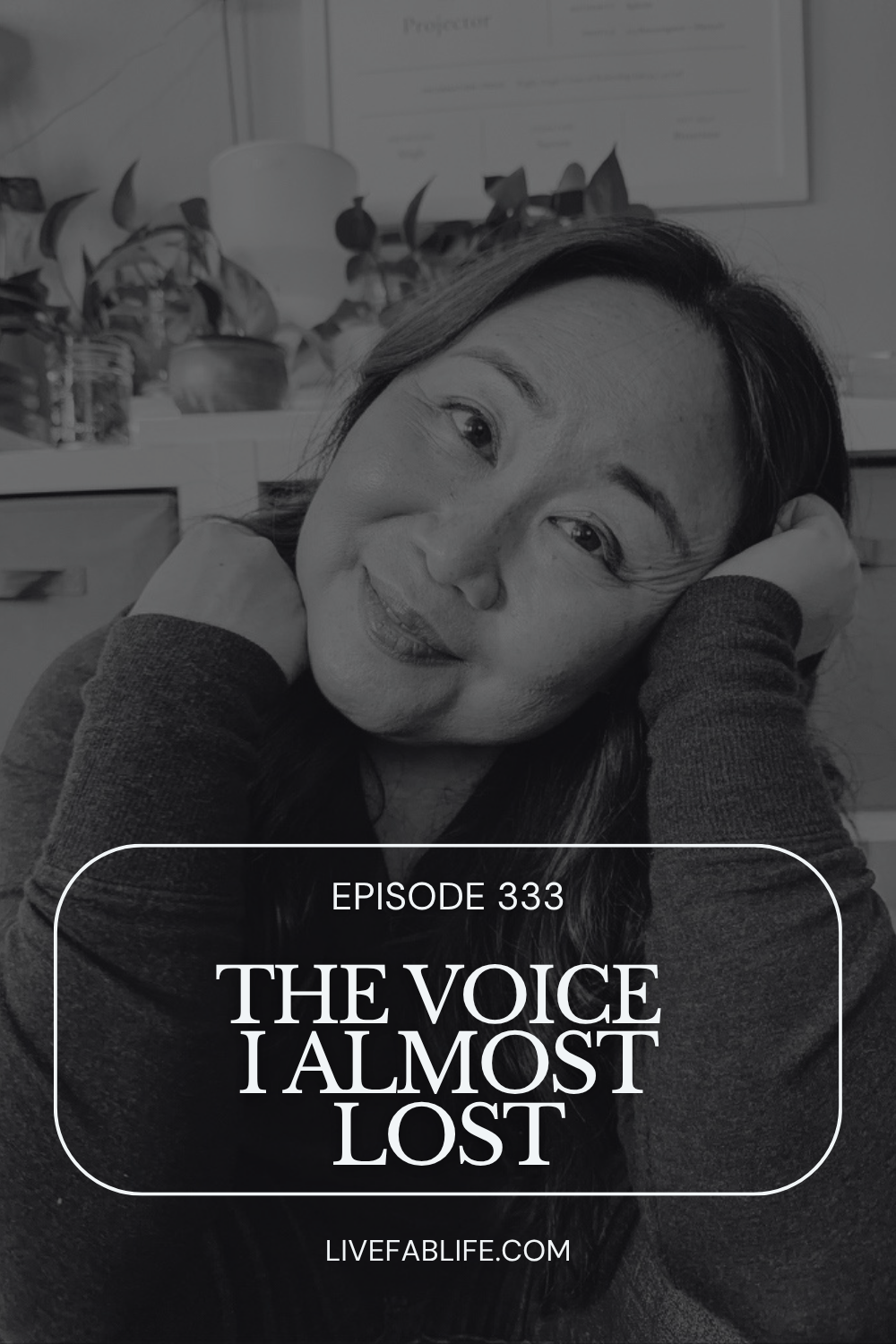

Naomi Nakamura is a Human Design-led wellness practitioner.
She helps Gen X women who are burnt out on corporate, laid off or seeing it coming, and who’ve tried every wellness trend and still feel unwell, see their own patterns, using Human Design as structure and functional wellness as data.
Her work lives where bio-individuality stops being a philosophy and starts being a practice.
Naomi resides in the San Francisco Bay Area and can often be found exploring the area with her puppy girl, Coco Pop!
Connect with Naomi on: Instagram
| Substack