Episodes Archives
Most wellness approaches name the symptom, land on a tidy explanation, apply generic solutions, and call it done. The diagnosis becomes the whole story. The before-and-after becomes the whole truth, sometimes, even when claiming a "root cause" approach was taken.
Using my own twenty-year struggle with sleep, I show what gets missed when the story stops there. For the first time in two decades, I'm sleeping restfully through the night. It would be easy to hand you one clean reason why. Instead, I pull back the layers: the years of remedies, the "root cause" investigation, the temptation to pick a single cause and move on.
This episode is about why the story matters — what the real mechanisms are underneath a struggle and the cost of what happens when the story is missed.
It’s the ninth anniversary since The Live FAB Life Podcast debuted!
In this return episode, I'm sharing the real story behind the seven-month hiatus: the slow fade that started last year, the mental block that made me hate even talking about my own offers, and the POV exercise in a photography community that cracked something open I didn't know was closed.
I walk you through getting laid off after eighteen years in corporate tech, and what it revealed about how sanded-down and sanitized my own voice had become without me noticing.
I also share where things stand now — the refresh (not rebrand) that I've been quietly doing all summer, what's ahead for this show, how Substack fits in, and the point of view I landed on after all of it.
The new year is treated like a reset button — as if your body, energy, and history are supposed to magically start over overnight.
But your energy doesn’t reset on January 1.
In this episode, I talk about why there is no “right” way to begin, why every phase of your wellness journey counts, and why pressure to do things perfectly often disconnects you from yourself.
We’ll talk about New Year’s goals and fresh starts — without shaming any of them — and then zoom out to the real skill that actually changes everything: learning how to make the right decision for you, at the right time, in a way your body can support.
If January brings pressure, guilt, or the sense that you’re already behind, this episode is here to take that weight off.
This year, I didn’t hustle. I returned.
I returned to how my energy actually works. I returned to how my mind processes. I returned to timing instead of pressure. And I returned to showing up in ways that don’t cost me my health.
In this episode, I share what I finally had to face: I was still running operating in a Generator way — weekly output, constant visibility, and treating consistency as proof of worth.
I break down my Human Design — my Incarnation Cross, active gates, and my only channel — and explain why that approach doesn’t work for me. My role isn’t endless production. It’s discernment, synthesis, and speaking at the right moment.
I also share what this means for the podcast and how I’ll be showing up moving forward.
If you’ve been forcing yourself into structures that drain you and wondering why it feels so hard, this episode will help you understand what patterns to notice.
In this episode, we’re talking about inconsistency and why certain routines never stick, why “discipline” isn’t the issue, and how your Human Design shows the natural rhythms your body prefers.
If you’ve ever tried to force yourself into someone else’s routine, wondered why it only worked for a week, then berated yourself for “not sticking with it”, this episode will help you understand why — and what to build instead.
We’re taught to make decisions from our mind — research, logic, pros and cons — and then wonder why everything feels harder than it should.
But the truth is: your body gives you information long before your mind starts analyzing anything.
In this episode, we’re breaking down the early signals your body sends — the physical cues, energetic shifts, and subtle patterns – the ones that are usually overlooked — and how Human Design gives language and structure to those early signals so you can stop pushing through them, stop misreading them, and stop treating them like flaws.
You’ll learn how your body responds before your thoughts do, why you’re so used to overriding those responses, and how noticing them can make decisions easier and reduce stress.
If you’ve ever pushed past your limits, said yes when you knew you shouldn’t, or talked yourself out of what you felt immediately — this episode will help you understand why.
In this birthday episode, we get personal and talk about the parts of ourselves we’ve been taught to tone down, cover up, or feel ashamed of — the quirks, patterns, and preferences we thought made us “too much,” “too sensitive,” or just… weird.
And how Human Design gives us a language — and a framework — to see these parts not as flaws, but as guidance.
We discuss:
Why your quirks aren’t accidents — they’re insights
How I reframed what I used to feel self-conscious about through my Human Design
Real-life examples from my chart (and maybe yours, too!)
You know how the saying goes, “trust your intuition”? It sounds great — until you're staring at your meal plan, second-guessing your symptoms, and wondering why you still don’t feel like yourself.
This episode is about self-leadership — and how Human Design gives you a practical path back to trusting your judgment, body, and energy again.
We’ll unpack what self-leadership really means, the subtle ways we learn to override it (even with “good” advice), and how each of the seven Human Design Authorities offers a tangible, practical approach to building that trust again — one decision at a time.
This isn’t about ignoring input or never asking for support. It’s about becoming the kind of person who knows how to hear themselves — and lead themselves — even in the noise.
In this episode:
What self-leadership is (and isn’t)
Why wellness culture often disconnects us from our inner compass
Seven ways Human Design helps you stop outsourcing your decisions
The difference between following intuition vs. understanding your Authority

In this episode, we unpack the gap between what your lab tests say and what your body feels — and why both are valid.
As someone who deeply values functional lab data, I’m not here to dismiss it. In fact, I still regularly test through my own care team. But lab work is just one piece of the puzzle. Functional data is powerful — but it’s a snapshot, not a full story.
What happens between tests? What happens when symptoms don’t align with results?
This isn’t about replacing one system with another — it’s a yes, and. It offers context. Insight. A filter.
We explore how your energy, rhythms, and lived experience can help you contextualize the data, not override it. So you can use data without gaslighting your own experience — and start making decisions that reflect how you actually feel in your body.
Whether you’ve been chasing numbers that never quite click, or you’ve felt unseen by “normal” results — this one’s for you.

If you’ve tracked everything — your food, your steps, your sleep — and still feel more overwhelmed than aligned, this episode is for you.
In this episode, I’m unpacking the difference between tracking for clarity vs. control — and how Human Design helps you know what’s worth tracking for you.
We’ll talk about:
The patterns tracking helps you see — and when it becomes self-surveillance
Why Human Design is the lens that makes data useful (not just noisy)
How to make tracking feel supportive, not obsessive
Because the goal isn’t perfect data. It’s a rhythm that makes sense for you.

Before you can build a rhythm that fits, you need to understand the energy that’s driving it.
In this episode, I’m breaking down what energy mapping through Human Design is, why it matters, and how it helps you create wellness rhythms that actually work for you — not just on paper, but in real life.
If you’ve ever felt like your energy was inconsistent, unpredictable, or just hard to work with… this one’s for you.

You’ve counted. You’ve journaled. You’ve tested and “done the work.”
So why do your patterns still feel… confusing? Why does self-awareness still leave you stuck in the same loops?
In this episode, I’m talking about how Human Design helps reveal the patterns you've been living in — the ones that never made sense until you saw them through this lens.
We’ll unpack:
Why your patterns aren’t problems — they’re invitations
What changes when you track through energy, not just effort
How Human Design gives language to the cycles you've been trying to name
This isn’t about fixing yourself — it’s about understanding how you actually work, so you can move forward with clarity, not confusion.

In this episode, I discuss what it really means to find rhythm in your wellness — not through more rules, protocols, or plans, but through your Human Design.
Because if you’ve been doing “all the right things” and still feel off… it’s not a “you” problem. It’s a mismatch.
We’ll unpack:
Why popular wellness rhythms don’t stick
What finding your own rhythm actually looks and feels like
How Human Design gives you the blueprint to rebuild trust with your body, your energy, and your timing
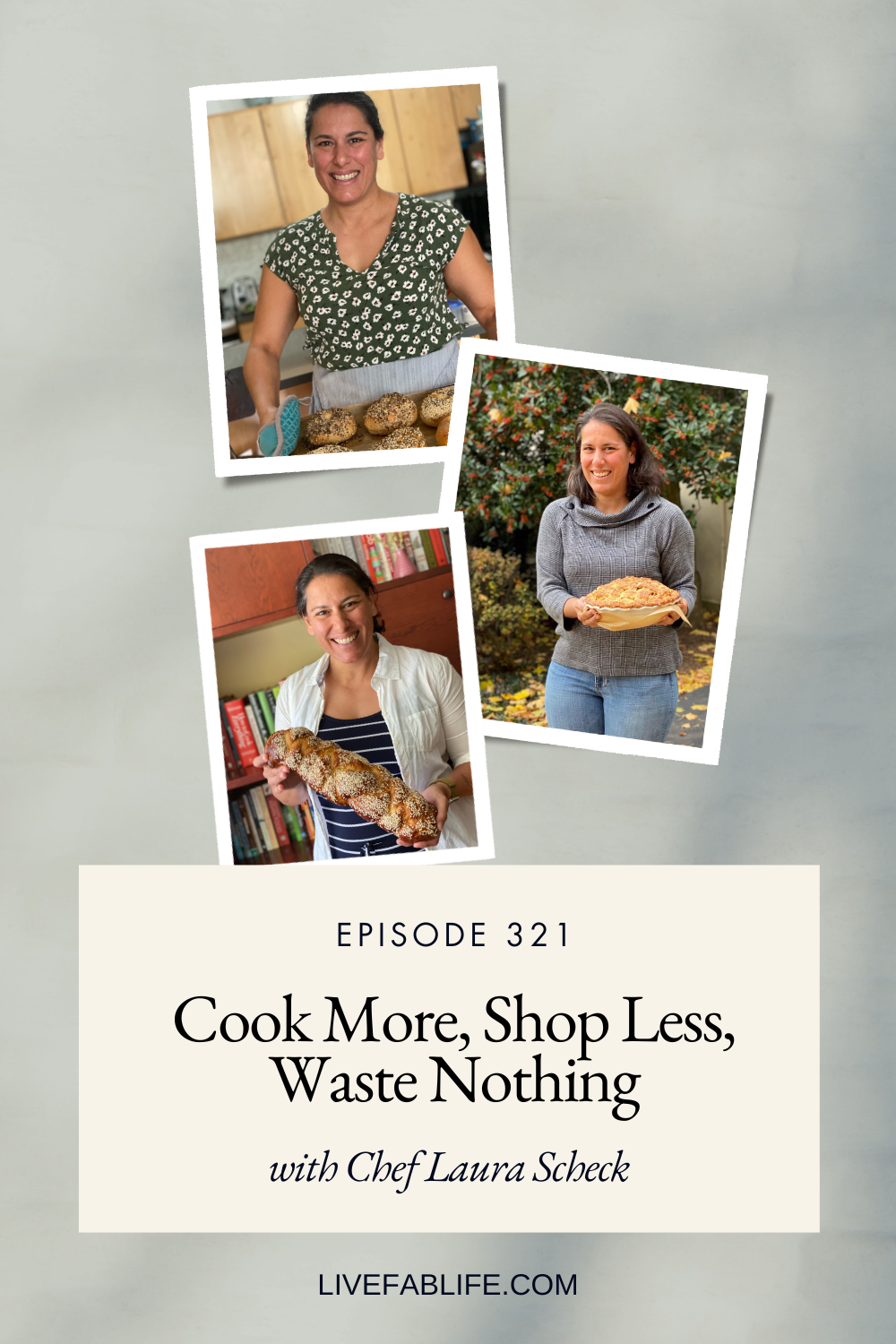
What happens when a former school teacher swaps lesson plans for sheet pans — and merges these two areas of expertise together? You get Chef Laura Scheck of Teaching Table — a culinary educator with a knack for demystifying scratch cooking using fresh, seasonal ingredients.
As someone who’s deeply into health and wellness but couldn’t cook to save my life… let me tell you, this convo is personal. I took my first class with Chef Laura last fall, and when I pulled a golden loaf bread out of my oven, I thought: Wait. I made this? Since then, I’ve taken five (okay, maybe six) of her classes — from mocktails to gluten-free galettes — and my kitchen confidence has never been higher.
In this episode, you’ll hear:
How Chef Laura went from the classroom to the kitchen (and blended the two)
The power of modifying instead of stressing
Her 3 go-to meals for when you’re short on time
Why cooking confidence isn’t about perfection – it’s about play
The 3 kitchen tools she can’t live without
This one’s light on Human Design, but packed with heart, humor, and those quiet “oh wow, I can do this” moments we all need more of. If you’ve ever felt intimidated by the kitchen, this episode is for you!
What does it really mean to stop outsourcing your wellness?
In this foundational episode, we look at what defines what outsourcing looks like in a wellness context, why we do it, and how to begin reclaiming trust in your body, even if you've spent years disconnected from it.

So many women secretly carry the shame of feeling "lazy."
This episode breaks down how Human Design helps reframe what laziness really is (hint: it’s not what you think).
We explore:
How we came to form our beliefs around laziness, productivity, work ethic
What's really at the root of these beliefs
What it looks like through the lens of Human Design
And how to find sustainable energy that has nothing to do with pushing harder

This episode kicks off a series of foundational conversations — the kind that remind you: it’s not you. It’s the systems you were handed.
We’re unpacking what happens when you try to follow all the “right” wellness rules and still feel exhausted, bloated, or like something’s off — and why Human Design offers a new way to listen, rebuild, and reclaim.
This is your permission slip to stop blaming yourself — and start working with your body, not against it.

What happens when you stop bracing at your own reflection—and start seeing yourself clearly for the first time?
In this solo, deeply personal follow-up to Episode 316, I share what actually happened when I joined The Self-Portrait Challenge with visibility mentor Lisa Haukom — and what it cracked open for me.
What began as an experiment in iPhone photography quickly became a process of unpacking why I’ve spent most of my life flinching at photos of myself to softening old stories, letting go of performance, and reclaiming how I see myself now.
You’ll hear me share:
The quiet grief of no longer recognizing your body
The power of documenting (not performing)
How representation—especially as an Asian women—isn’t just about visibility, but self-trust
Why learning to love photos of yourself isn’t about vanity—it’s about recognition
Whether you're in your thirties, forties, fifties or beyond, if you’ve ever felt invisible in your own life or body, this one’s for you.

You know what to do. You’ve tried to do it. But for some reason, it just never sticks—and you’re left wondering if you just lack willpower.
This episode is your reminder that you’re not flaky, uncommitted, or “bad at routines.” You’re just making decisions from the wrong place.
We’re unpacking the real root of burnout and inconsistency: decision fatigue, external pressure, and ignoring your inner guidance. If you’ve ever said “I know what to do, I just don’t do it,” this one’s for you.

You’ve followed the "food rules." Bought allllll the supplements. Checked every “should” box. And yet... you’re still exhausted, overwhelmed, and questioning yourself.
This episode is your permission slip to stop blaming yourself—and start noticing where your wellness plan is just out of alignment.
We’re breaking down:
How to recognize when you’re forcing vs. flowing
What Human Design can reveal about it
Why the “problem” isn’t you—it’s the performance-based wellness culture we’ve all been conditioned by

If you’ve ever wondered why the “just wake up at 5am and grind” routine doesn’t work for you, this episode is your permission slip to stop forcing it—and start understanding how your energy actually works.
You’re not broken. You’re just trying to follow wellness advice that wasn’t designed for your energy.
In this episode, I’m pulling back the curtain on why your go-to wellness practices might be doing more harm than good and calling BS on the performative self-care trends and hustle wellness that leave you burned out and blaming yourself —and how Human Design gives you the blueprint to stop forcing, start flowing, and finally feel better in your body.

In this episode, I’m joined by returning guest and personal style powerhouse, Alisa Koz — an expert in fashion psychology, sustainable style, Astrology, and Human Design.
Back in Episode 275, Alisa cracked open my natal chart and started connecting the dots between my energy, my aesthetic, and my style misfires. You know the ones —
→ Outfits that looked amazing on Pinterest but flopped IRL
→ Clothing boxes that missed the mark by a mile
→ Makeup that matched my mom’s taste, not mine
→ And style quizzes that left me feeling more boxed in than inspired
Since that first conversation, I’ve been deep in Alisa’s world — and for the past three months, I’ve had the privilege of being a beta student in her brand new program, Personal Style Mastery.
In this episode, we’re pulling back the curtain on:
The birth of Personal Style Mastery and how Alisa blended her expertise into a one-of-a-kind framework
My experience inside the program (yes, I had aha moments around fruit metaphors and auric alignment)
What we’ve both learned through this process — and why this isn’t just about looking good, but feeling deeply aligned in your skin and your clothes
How to join the waitlist for the first official round of the program
If you’ve ever felt like your closet doesn’t reflect who you really are — or that style advice never seems to “click” for you — this conversation is your permission slip to explore fashion in a way that’s personal, powerful, and fully aligned with your values.

Let’s talk about what no one else is saying.
This episode is for the Projectors out there trying to live by their design while also… you know, navigating real life. The 9–5 job. The to-do list. The relationships. The “I just want to feel good in my body” moments.
In Part 2 of our Projector Q&A series, I’m back with my favorite thought partner, Nadia Gabrielle, and we’re going even deeper.
No filters. No fluff. Just two Projectors telling the truth.
We unpack:
What being a Projector in a 9–5 actually requires (spoiler: it’s not pretending to be a Generator)
Deconditioning in real time—what it looks like when it’s messy and unsexy
Planning your week as a Projector (yes, you can still get sh*t done)
Navigating relationships without losing yourself or your energy
Supporting your health + nervous system in a world that wasn’t built for your rhythm
It’s part guidance, part myth-busting, and part “you’re not broken—you’re just deconditioning in a Generator world.”
If you’ve been trying to do it all “right” but still feel off…
This one’s gonna land.

When you ask two Projectors a bunch of questions, we take it as a formal invitation to go all in—and you know we will.
This episode is where insight meets real talk, as we unpack your most burning Human Design questions with honesty, clarity, and zero fluff.
In Part 1 of this special Q&A series, I’m joined by my go-to thought partner, Nadia Gabrielle, as we answer questions submitted by you.
Together, we dig into:
Recognizing the nuances of Projector invitations
Honest thoughts on life “hacks”
Visibility and magnetism in business and life
Expect stories. Tangents. Truth bombs. And a reminder that you don’t need more advice—you need guidance that meets you where you are.

If you've ever felt like you don’t have a clear sense of who you are, struggled with direction, or found yourself changing based on who you’re around—this episode is for you.
The Undefined G-Center is often misunderstood. Instead of being a flaw, it’s actually a gift: the ability to flow, evolve, and take in life’s experiences from different angles. But when conditioning creeps in, it can make you feel ungrounded, lost, or like you need to force an identity.
In this episode, we’ll explore:
What it really means to have an undefined or open G-Center
The beauty (and challenges) of fluid identity
How conditioning around “having a clear direction” impacts those with an Undefined G
Practices to embrace your natural ability to evolve without losing yourself
If you’ve ever felt pressure to “figure yourself out” or “stick to one path,” this episode will help you reclaim the power of your adaptable, open-hearted nature.
If you’ve ever felt like you had to prove your worth, work harder to deserve success, or constantly seek validation, your Undefined Heart Center might be at play.
The Undefined Heart Center is one of the most conditioned areas in Human Design, leaving many of us stuck in overworking, over-promising, and over-proving. But what if your worthiness wasn’t something you had to prove—but something you simply owned?
In this episode, we’re breaking down:
How the Undefined Heart Center impacts self-worth and validation
The sneaky ways it shows up in career, relationships, and daily life
How to stop the cycle of proving yourself and start trusting your natural value
If you’ve ever thought “I just need to work harder” or “I’ll feel worthy when…”, this episode is for you.

What if the way you show up in relationships has less to do with effort—and more to do with your subconscious capacity?
Returning to the show is my friend, mentor, and frequent guest, Nadia Gabrielle—a teacher of conscious strategy and subconscious capacity.
In this episode, Nadia and I dive into the deep, often overlooked connection between capacity and relationships. She shares how our subconscious beliefs shape the way we connect with others—whether in personal relationships, work dynamics, or even our relationship with institutions and systems.
Through real-life case studies and personal experiences, we explore:
How subconscious capacity impacts relationships (in ways you might not expect)
The patterns that keep you stuck in relational burnout, overgiving, or misalignment
Strategies for building resilience and repairing connections—without depleting yourself
If you’ve ever felt drained in your relationships, struggled to hold boundaries, or wondered why certain dynamics feel so hard, this conversation is for you.
Tune in to learn how to expand your capacity and transform the way you relate to others—without losing yourself in the process.

How much of your stress is truly yours—and how much comes from the world around you?
In this episode, we’re diving deep into the intersection of stress and conditioning, exploring how societal, familial, and even workplace expectations shape our responses to pressure. By understanding how conditioning contributes to chronic stress, you’ll learn to untangle inherited patterns and reclaim peace.
We’ll cover:
How your Human Design reveals stress patterns and where you’re most vulnerable to conditioning
Tools to differentiate external stress from your own natural rhythms
Strategies to decondition, restore alignment, and protect your energy in a world that thrives on hustle
If you’re feeling the weight of other people’s expectations or struggling to find calm amidst chaos, this episode is for you.
Did you know your daily routine can feel radically different—and more aligned—when you honor your Human Design?
In this episode, we’re diving into the Human Design Clock, a framework that helps you structure your day based on your natural energy patterns. Whether you’re a morning go-getter or someone who thrives in quiet, reflective evenings, this concept can help you harness your energy, reduce overwhelm, and live in greater alignment.
You’ll learn how to:
Identify the natural flow of energy in your Human Design type
Build routines that work with your energy, not against it
Avoid the common pitfalls of rigid schedules that leave you feeling drained
If you’ve ever struggled to make daily routines stick, this episode will help you craft ones that truly work for you.
If you’ve ever avoided being in photos…
If you’ve ever hated how you looked in one (or all) of them…
If you’ve ever wished you could just feel good being seen — this episode is for you.
In this episode, I’m joined by the woman currently teaching me how to actually see myself in photos — not with filters, angles, or forced confidence, but with presence.
Lisa Haukom is a visibility expert, creative director, and the founder of The Photo Club Method. She helps women shift the way they see themselves — in photos, yes, but also in life. Because hiding from the camera? Usually means we’re hiding from ourselves, too.
We talk about:
Why we flinch when we see ourselves on camera
What it really means to reclaim your image (without changing your body)
How learning to take self-portraits (not selfies) is actually a tool for self-trust
And what happens when we stop disappearing from our own lives
This conversation cracked something open in me — and I think it might for you too.
Because you don’t need to change anything.
You just need to see what’s already there.